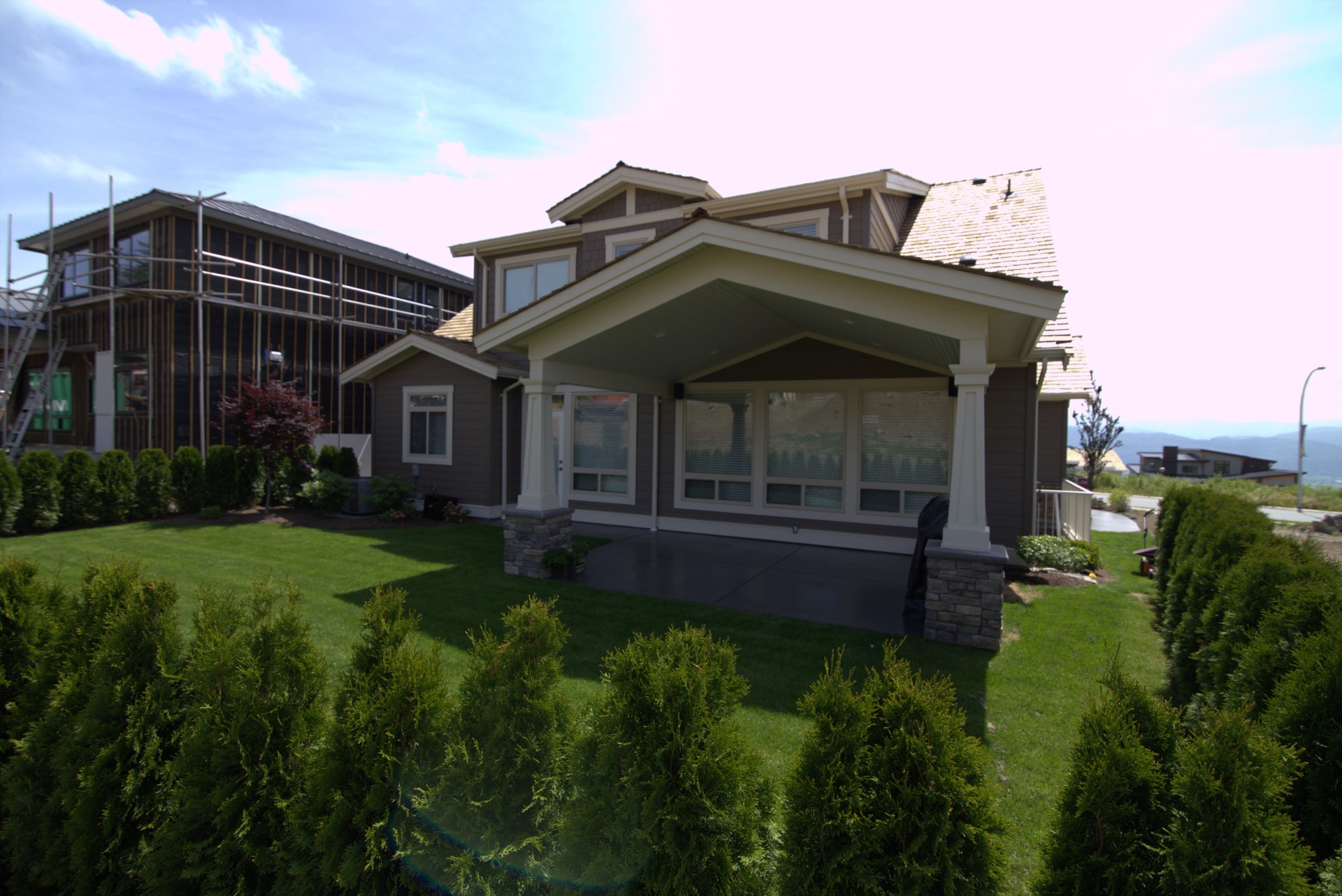
Not every excavation job needs a big machine, and many of the ones around a house can’t use one. A narrow side yard, a gate, a fence line, or a garden you’d rather keep all limit what can get in and how much ground gets disturbed.
As an excavation contractor working in Abbotsford and across the Fraser Valley, we our small excavator for exactly this kind of work: drainage, trenches, foundations for additions and garages, driveway bases, and clearing.
The hours a machine spends digging are not usually the biggest line on an excavation quote. Trucking soil away, disposing of it, bringing in gravel, packing down backfill, and restoring the surface often add up to more, and one quote can include any of them while another leaves them out.
The site drives most of the number: how easy it is to reach, what the soil and rock are like, whether groundwater shows up, what’s buried nearby, and how far the soil has to travel from the hole to the truck. That’s why a good excavation contractor looks at the property before quoting, and why we do the same.
Our quote spells out what’s included and what isn’t, so you know exactly what you’re paying for. Before we start, we explain how a surprise, such as unexpected rock or an unmarked private line, would be handled and approved.
Many small residential jobs take one to three days, while larger or phased projects can run several weeks. The difference is usually the volume of ground being moved and how tricky the access is.
Waiting on utility locates (the marking of buried lines), permits and inspections, groundwater, rock, and long hauls can all stretch a schedule. So can weather. Abbotsford averages about 1,500 millimetres of rain a year, and November alone brings nearly six times as much as July, which means saturated soil, water in trenches, and slow truck access from late fall into spring. Drier months are easier on the ground and on the schedule, though dry spells bring dust to manage.
Here is what small excavator work covers around a house, from the first stump to the finished base:
Brush, roots, stumps, and unsuitable soil come out before construction or landscaping begins, and the ground is shaped for what’s coming next. We clear what the project needs and leave what it doesn’t, which keeps the rest of your yard as intact as possible.
We dig foundations for additions and detached garages, and trenches for the water, sewer, electrical, gas, and drainage lines that plumbers and electricians connect. Depth, width, and slope all matter here, which is why we work from your drawings or an engineer’s specifications whenever the project has them.
Grading cuts and fills the ground to the slopes a job needs, so water runs away from the house and not toward it. Backfill (the soil or gravel that goes back around finished work) is placed in layers and packed down, because loose backfill settles, and settling is how driveways dip and patios crack.
Digging for perimeter drains (the pipe around your foundation), French drains, and swales (shallow channels that guide water) suits a compact machine well, since it can work close to the foundation without tearing up the whole yard.
A driveway, patio, walkway, or retaining wall is only as stable as the ground beneath it, and the excavation sets the depth and slope for the gravel base. We can break out and remove old concrete or asphalt with a hydraulic breaker attachment and load it out for disposal.
Extra or unsuitable soil is loaded and taken away. Where native soil isn’t right for the job, as it often isn’t under a pipe or a driveway, gravel, sand, or crushed rock is delivered instead, and we tell you which parts of your project need it.
Most jobs follow the same path, and a small job simply moves along it more quickly.
Before a machine touches the ground, the buried lines underneath have to be found and marked. WorkSafeBC requires it, and the companies that own those lines need at least three full working days’ notice. Close to a marked line, we expose it by hand within a metre of the marks before any machine goes near it, and if we can’t find it, we ask its owner for help.
The same rules shape the hole itself: any excavation deeper than 1.2 metres needs sloped or supported walls before anyone goes in, soil has to stay at least 60 centimetres back from a trench edge, and water can’t be left to collect where it could weaken the walls. Permits depend on your municipality and the project. Minor landscaping, drainage, and grading usually differ from foundations, retaining walls, and work on city-owned land, which more often involve permits or engineering. We check with the City before any work starts.
Seeing machinery roll into a yard you’ve cared for can be unsettling, so we plan with that in mind. A small machine already disturbs less ground, and the rest is planning. During the site walk we work out the route the machine will take, where soil can be stacked without crushing a garden or blocking a neighbour, and whether a gate section or fence panel has to come out, so you know before we start and not when the machine arrives.
Expect noise during the dig, trucks coming and going on haul days, and dust in dry weather, which we keep down. We keep the driveway usable where we can, and we restore what we’ve disturbed as set out in your quote.
An excavation contractor removes, moves, and reshapes soil so something else can be built or fixed: a foundation, a trench for a service line, a drain, a driveway base, a level yard. The digging is the visible part. What comes before it (locating lines, planning access) and after it (hauling, backfill, compaction, restoring the surface) matters just as much.
Often, yes. The smallest compact machines are narrower than many side-yard gates, and we measure your access during the site walk, which lets us choose the machine before the day we arrive. If something has to come out, such as a fence panel, we tell you in advance.
Generally up to 10 feet deep, which covers most residential work, such as small foundations and drainage trenches. Deeper digging usually calls for larger equipment.
We arrange the locates on every dig. Permits depend on the project and the municipality, and we check with the City. Your quote states who handles what.
Some of it can often stay and go back in as backfill, and the rest is hauled away. Since native soil doesn’t always suit the gravel under a pipe or a driveway base, gravel or crushed rock may come in. Your quote says what goes out and what comes in.
Public records don’t always show private lines, such as irrigation or an old drain connection. Tell us anything you know about your property. The machine stays back from located lines, and if one can’t be found, we contact its owner before we dig further.
Septic systems are regulated work, and only registered practitioners may design and install them, and general excavation experience isn’t enough. If your project includes one, we’ll tell you plainly and help you find the right specialist.
Element Pacific Homes has been providing comprehensive custom home building, home renovation, and home addition services to homeowners living throughout the Fraser Valley since 2014. All of our custom home services are performed by our highly trained and experienced team members who will go above and beyond to bring your dream home to life.
Copyright (C) 2026 Element Pacific Homes | Website By: FirstPage Marketing